Wheat Planting and Harvesting in Farming Simulator 25


Wheat is the world’s third most produced cereal crop after maize and rice. In Farming Simulator 25 it is used directly in several production chains. It is also a primary feed for chickens and chicks. In this guide we plant wheat for maximum yield, harvest it, and sell it. In later articles, once we cover the production chains, you can use wheat however you prefer.
For this walkthrough we used the Hutan Pantai map.
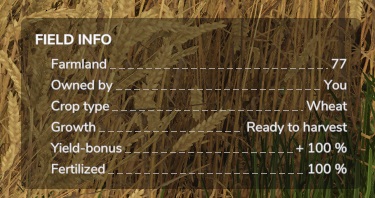
Wheat Planting / Harvest Window: September–October / July–August
Growth Time: 10 months
We have already published detailed guides on this topic, so we will not repeat a full preparation section here. We will only list the steps.
Related Guide: Farming Simulator 25 Soil Management and Yield Guide

For maximum yield, start by mulching to cover leftover stubble. That is where we begin. In this guide we walk step by step through planting wheat again on a freshly harvested field for maximum yield.
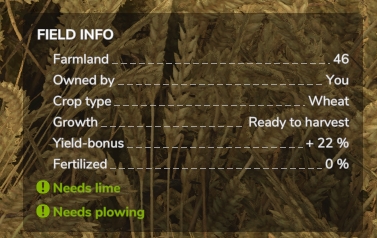
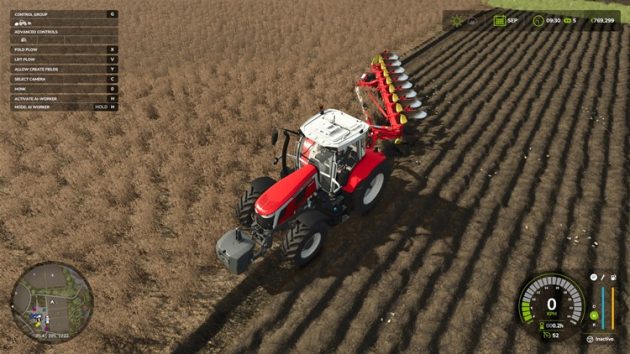
After this step, if the field shows the ?Field needs plowing? warning, plow the field first. If there is no warning, move on to the next step.
Helper Guide: How to Use a Plow and Plow Fields in Farming Simulator 25
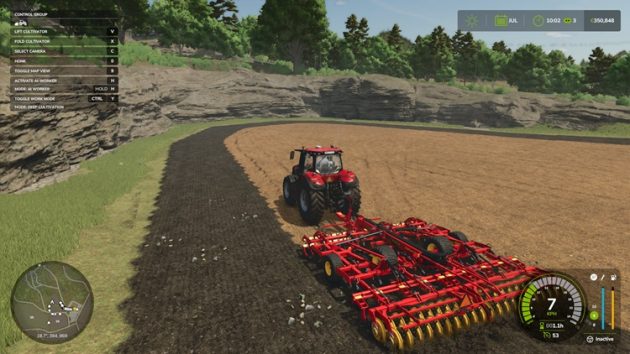
We cultivate the field to prepare it for the next seeding.

Next we apply lime. After every third harvest, liming is required to keep the field’s pH balanced.

Then we apply the first fertilizer pass. You can use solid fertilizer, liquid fertilizer, or animal manure – whichever you prefer.
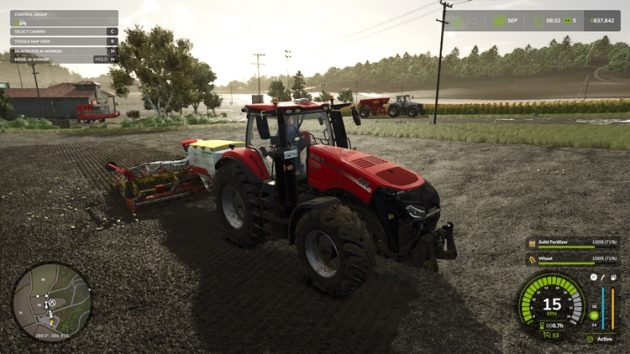
To plant wheat you need a seeder. We do not want to fertilize the field again separately, because two fertilizer applications are required for full fertilizer yield. We will apply the second fertilizer pass during seeding.
The equipment we use is the Pöttinger Aerosem VT 5000 DD. We fill both the solid fertilizer hopper and the seed hopper with bags bought from the store.
A single seeder load of seed can plant every crop that seeder supports. Because we are planting wheat, press Y to change the selected seed type.
While placing seed, the seeder automatically applies fertilizer from its hopper, so the seeded area counts as fertilized a second time. For maximum yield you need two fertilizer applications. (With the Precision Farming DLC this works differently – that pack supports applying the nitrogen the field needs in a single pass. In the base game, two fertilizer applications are important for maximum yield. We will prepare a separate guide for the Precision Farming DLC.)
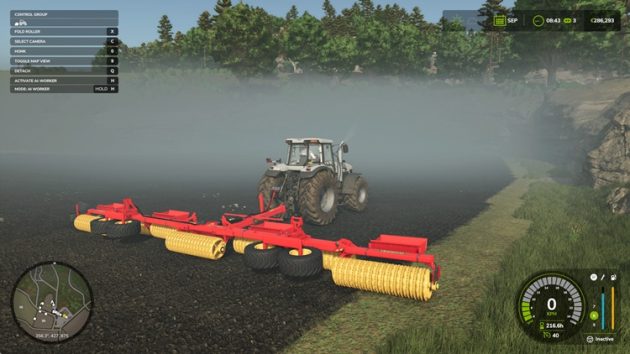
After seeding, cover the field with a roller. Otherwise the seeds stay exposed and yield drops.
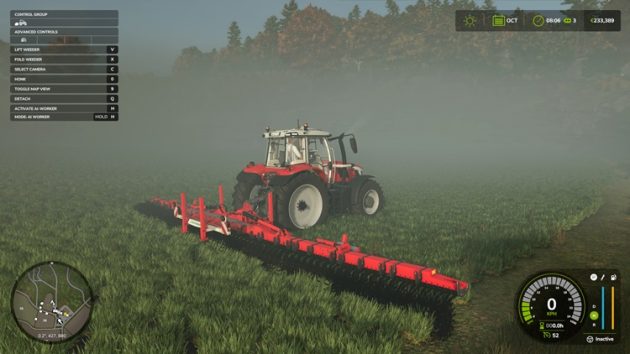
About one month after planting, weeds start growing along with the crop. If you want a quick fix, use a weeder.

You can follow the wheat growth stages until harvest.
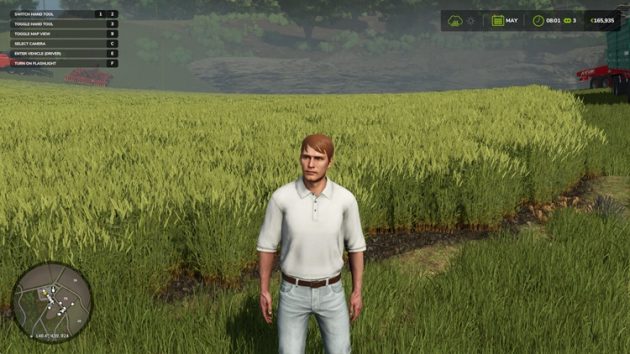
When the wheat heads turn yellow and the season reaches the harvest months of July–August, you can start harvesting.
For this you need a combine harvester with a grain header.
Combine Harvester Controls
X – Unfolds / folds all parts and equipment so the combine is ready to harvest.
V – Lowers the header to crop height.
B – Turns the combine on so you can start cutting the field.
COMMA ? Drops chopped straw in a windrow on the field, or spreads straw across the field surface.
O – Extends the unloading pipe so you can transfer harvested crop from the grain tank into a trailer.
CTRL + I – Dumps the combine’s grain tank onto the ground at your current position.
H – Hires a worker to harvest the crop for you.
Hold H – Activates the GPS system so you can follow the guidance lines and harvest faster in neat, straight passes.
Collecting Straw Piles on the Field
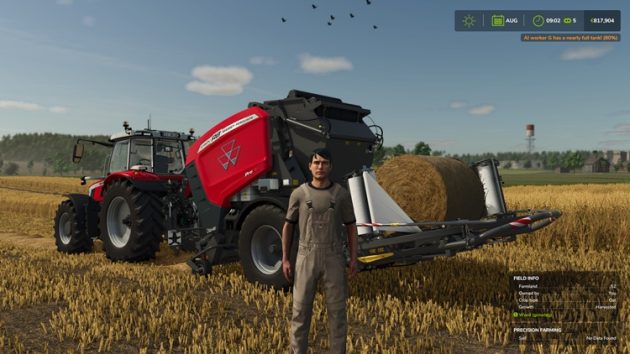
We prepared a detailed guide on this topic. Follow the link below for more information.
Related Guide: How to Make Straw and Bales in Farming Simulator 25
Selling Wheat for Maximum Profit
To sell your wheat at the highest price, wait until December. In December, wheat demand peaks and you will get the top price at any sell point you choose.
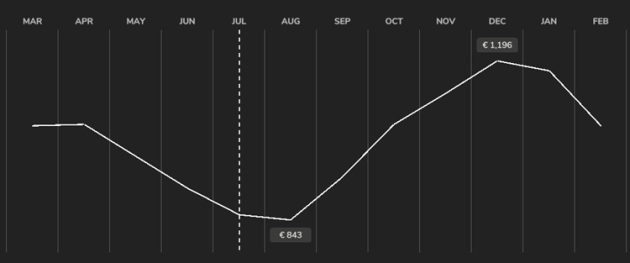
The lowest price is in August, which falls within the wheat harvest window.
I also set myself a challenge – I’ll leave the video here. A full 1 million liters of wheat harvested, and at maximum yield.